




Key Takeaways
- Process tank design should reflect the material, operating conditions and required process function.
- Agitators, jackets and insulation can be specified for mixing and temperature control requirements.
- Tank orientation, fittings and drainage affect integration with existing plant and pipework.
- Capacity, production volume and available floor space help determine the appropriate tank size.
- Barry Brown & Sons handles custom fabrication, delivery, installation and commissioning for industrial process equipment.
Every process tank project starts with a question about what it actually needs to do.
Holding, mixing, heating and cooling each call for different construction details, internal components and connection points. To get those details right, tank manufacturers should make tanks that are specific to your materials, operating conditions and site layout, rather than having you fit your operation around a standard tank.
At Barry Brown & Sons, we do just that: we work with industrial operations to develop process tank configurations matched to the application, from fabrication through to installation.
Determine what your process tank needs to do.
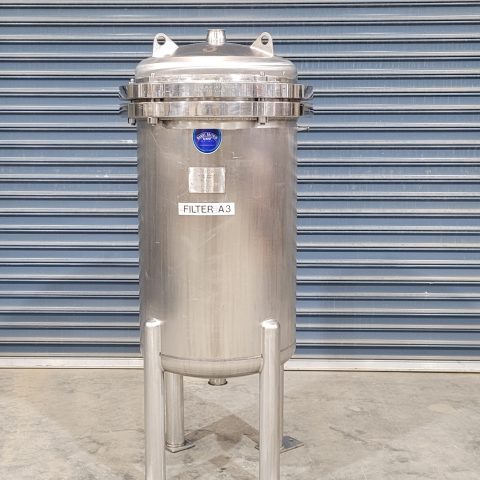
Process tanks are used for holding, mixing, heating and cooling materials at different stages of production. The right configuration depends on the material being processed, the tank’s function and the operating conditions it needs to maintain.
A storage tank has different design requirements from a tank used for agitation or temperature control. Its intended duty affects the tank construction, internal components and supporting equipment. Depending on the application, this can include agitators, heating or cooling jackets, insulation and specific process connections.
The tank also needs to integrate correctly with the surrounding process equipment.
Temperature control, material transfer, cleaning requirements and product flow should be considered during design. These factors, along with custom stainless steel fabrication requirements, influence the location and specification of inlets, outlets, fittings and other connections.
Defining these requirements early helps establish a tank configuration that suits the material, process conditions and existing plant layout.
Your custom tank should be built around your process.
How can agitators, mixing blades, jackets and insulation support different processing requirements?
- Agitators and mixing blades are used where materials need consistent blending, suspension or movement during processing.
- Heating or cooling jackets in a jacketed tank can control product temperature by transferring heat through the tank wall.
- Insulation reduces unwanted heat transfer and helps maintain operating conditions.
These features aren’t standard requirements for every process tank. They’re selected and combined to suit the application.
The right configuration depends on the material being processed, the required temperature range and industrial mixing requirements. It also needs to account for how the tank connects with upstream and downstream equipment, so each component supports the wider production process.
Orientation, fittings, inlets, outlets and drainage arrangements affect how equipment operates on site.
Vertical or horizontal custom fabricated tanks can be specified to suit available floor space, access requirements and the processing system.
Depending on the application, this can include a stainless steel water tank or other purpose-built stainless steel vessel designed around the site and operating requirements. Inlets, outlets, fittings and drainage points are positioned to support material transfer, cleaning and connections with surrounding equipment.
The design of process tanks for dairy and beverage production and other purposes also needs to account for how operators access, clean and use the equipment during normal operation.
At Barry Brown & Sons, we can configure connection points, drainage arrangements and fabrication details around the existing plant layout and process flow. This allows tanks to integrate with pipework, pumps and other equipment while providing practical access for operation, inspection and maintenance.
Adapt process tanks to different industrial applications.
Process tanks need to match the materials, operating conditions and production requirements of the application. Barry Brown & Sons supplies stainless steel processing equipment for businesses across a range of industrial sectors, with tank configurations developed around the work equipment, like food processing tanks, needs to perform.
Rather than relying on a standard design for every application, we work with customers to establish the required capacity, configuration and process requirements. This can include equipment such as a milking vat for dairy operations, as well as tanks configured for food, beverage and other industrial applications.
These details guide the tank design and help determine the appropriate construction, fittings and associated equipment. This approach is suited to operations where an off-the-shelf tank doesn’t meet existing process or site requirements.
Our capabilities extend beyond tank fabrication as well.
We combine stainless steel fabrication with practical engineering experience to manufacture, modify and integrate equipment for different processing applications like sanitary or liquid processing. This includes a custom process tank and associated equipment required to support the wider system.
Where existing equipment needs to be incorporated, we can assess how your new manufacturing tanks will connect with the current setup and fabricate components to suit.
Installation requirements are also considered as part of the project. This is particularly important when equipment is being installed in an active production facility, where access, lifting requirements and existing services can affect how the work is carried out.
As a water cooled chiller manufacturer with broader capabilities across process tanks, industrial cooling equipment and stainless steel fabrication, Barry Brown & Sons can coordinate equipment handling and installation requirements across the wider processing setup, including equipment positioning, specialist lifting, installation and commissioning.
Where required, we can also account for electrical and plumbing services associated with the installation. Because we consider these requirements before the equipment reaches the site, we help reduce storage tank installation issues and provide a clearer path throughout the process.