




Key Takeaways
- Tank specifications should account for capacity, dimensions, material grade, fittings and operating conditions.
- Relevant industry experience helps align tank design with processing equipment, pipework and site requirements.
- Custom fabrication can incorporate fittings, agitators, insulation and heating or cooling jackets for specific applications.
- Barry Brown & Sons supplies new and refurbished stainless steel tanks from 10 to 100,000 litres.
- Freight, installation, testing and commissioning can be coordinated through one team from delivery through to operation.
Most searches for tank manufacturers come down to one question: can they actually build what your process requires?
Limited custom stainless steel fabrication capabilities, unfamiliar materials or a lack of experience in your specific industry can lead to tanks that need rework, additional suppliers or compromises on the original specification. That gap between what you need and what a manufacturer can deliver can cause significant problems in your operations.
This is where we at Barry Brown & Sons can help. We have been fabricating and supplying stainless steel tanks across Australian industries since 1970, with capabilities spanning custom builds, refurbishments and full project installation. This gives you access to proven fabrication capability backed by practical industry experience that you’d expect from one of the top tank manufacturers in the country.
Choosing the wrong tank manufacturers can create costly complications.
Limited fabrication capabilities can restrict your tank specifications.
Industrial tanks often need to meet defined requirements for capacity, dimensions, material grade, fittings and process conditions. The manufacturer needs the equipment and tank fabrication capability to build to those specifications without unnecessary design changes or additional suppliers.
Stainless steel tank fabrication may require specialised welding, forming and finishing methods, depending on the application and tank configuration. These capabilities should be assessed before your chosen tank manufacturers begin work on stainless fabrication.
Material selection and commercial tank fabrication methods also need to suit the operating environment, particularly where hygiene, cleanability, corrosion resistance or other process-specific requirements are critical to the finished tank.
Gaps in industry experience can make integration more difficult.
Tank specifications vary across dairy, food, beverage, chemical and other industrial processing applications, so relevant industry experience matters when selecting among the tank manufacturers available.
Food, dairy and beverage facilities, for example, require stainless steel tubes and fittings suited to hygienic processing conditions. Chemical and industrial applications may have different requirements based on the product, process and operating environment.
An experienced manufacturer can assess these factors alongside the tank itself, including process piping, fittings, equipment installation and site conditions. This helps align the tank design and associated equipment with the practical requirements of the wider processing system.
Experienced tank manufacturers provide more than basic fabrication.
Barry Brown & Sons has supplied, installed and fabricated engineered tanks and associated equipment since 1970, bringing more than 5 decades of practical industry experience to each project.
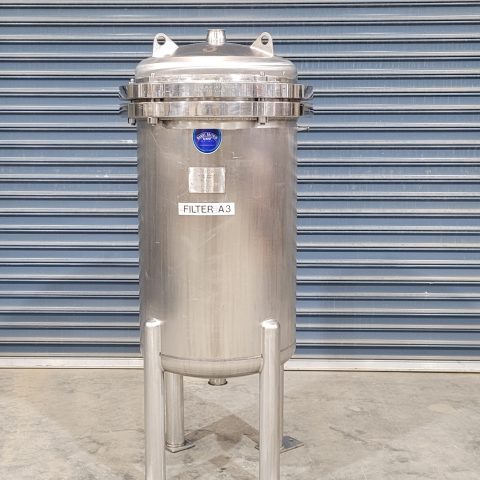
We supply new and refurbished tanks from 10 to 100,000 litres, covering applications from smaller process vessels through to a stainless steel water tank for large-scale storage. Tanks are available in single-skin, insulated and jacketed configurations, with vertical and horizontal designs to suit different site layouts, storage needs and processing conditions.
In addition, we work with different stainless steel grades based on the application and can customise fittings and connections where standard configurations aren’t suitable. This allows tank specifications to be matched to practical requirements.
Whether the requirement is a standard tank or more specialised industrial tank fabrication, we can supply equipment configured for the intended process and site.
Custom fabrication lets you account for unique tank specifications and process requirements.
Tanks can be configured around your equipment and operating needs.
Barry Brown & Sons offer tank design and fabrication services to suit specific process, storage and site requirements. We can modify existing tanks or fabricate new equipment to match the application, including the required capacity, configuration and operating conditions.
Custom options include process and service fittings, valves, sensors, ports and integrated pipework. Your process tank can also be fitted with agitators where product mixing or circulation is required. For applications that need temperature control, we can incorporate insulation and dimple jackets for heating or cooling.
Each configuration is based on the equipment’s intended duty and how it needs to integrate with the surrounding process. This gives you industrial vessels for liquid processing built around the practical requirements of your operation rather than a standard configuration that may need further modification.
Complete project support simplifies delivery and installation.
We manage freight, delivery, installation, testing and commissioning for stainless steel equipment. Before delivery, we can assess site access, transport requirements and commissioning needs, then plan lifting operations and installation sequencing around site conditions.
Our team of tank manufacturers can deliver, position and commission storage, processing and mixing tanks, along with associated equipment such as pipework and pump stations.
We coordinate each stage from transport through to final commissioning, providing the practical support you’d expect from an experienced water cooled chiller manufacturer while keeping equipment handling and installation requirements aligned with the project schedule.
Instead of coordinating delivery separately, you have a single point of contact responsible for getting the equipment ready for operation.